Saturday, 31 December 2011

Hydroponic Lights

A lot of hydroponic users cultivate plants in a greenhouse or in a room at their home. Since hydroponic gardening involves much less space than soil based gardening, it is possible to grow a more plants within a small space. In setting up this kind of a garden, one can opt to purchase a hydroponics kit that has all the necessary supplies that one would need. The kind of hydroponic lights that one should get depends entirely on what one wants to cultivate in their indoor hydroponic garden.

If one chooses to grow a small sized herb garden, that they should select fluorescent lights for the best results in this kind of a garden. Florescent lights are set near the growing plants and they help to provide the adequate illumination that is need for healthy and strong plant growth.
For the cultivation of fruits and vegetable, HID hydroponic lights are the best choice. Two kinds of HID lights may be used for growing this kind of a garden, Metal Halide and High Pressure Sodium HID lights. The Metal Halode lights are used to boost for plant growth, whereas the High Pressure Sodium HID lights enable the plants to blossom and carry fruit.

HID hydroponic lights are now available in special designs, so that one can have the Metal Halide as well as the High Pressure Sodium bulbs in one lamp. This probably helps to save the cost of purchasing two separate lamps. It may be suggested here that one should purchase hydroponic lights that come with reflectors, since these can serve to direct the light in the area where you want it to shine.
Turning to the amount of hydroponic lights that one would need, this varies and depends on the kind of plant being cultivated. The amount of artificial light required for the indoors hydroponic garden depends on where one resides and whether they make use of a green house or a room that receives light from the outdoors or not.

If a greenhouse house is being used for the hydroponic garden, there will likely be scarce need for artificial lighting during the later day of spring and the months of summer. However, during the fall and winter, when sunlight is scarce, it would be necessary to use more artificial lighting, especially if one resides in an area where there are storms and inclement weather conditions.
There are some indoor hydroponic gardens that depend completely on hydroponic lights. To make sure that a hydroponics garden develops well, it is necessary that the plants be provided with the appropriate quantity of water, hydroponic nutrients, and sufficient lighting. And through using hydroponic lights, one can rest assured that their plants will be well taken care of in terms of receiving all that they need to flourish.

Homemade Hydroponics

Homemade hydroponics is a budget-friendly way for newbies to get acquainted with the world of hydroponics gardening.  While starting off in the field of hydroponics, building something from scratch you or just going to a gardening shop and getting something off-the-shelf and ready-to-use is an important question that pops up.  While there are pros and cons for going the way of either route, if you are an avid Do-It-Yourself fan then building one yourself is going to be a gratifying experience.

One doesn’t have to be a rocket scientist to put together a homemade system as long as the basics are clear.  The first important lesson to learn is the difference between soil grown plans and hydroponic grown plants.  For soil grown plants the soil acts as the reservoir for the nutrients that the plants require.  On the other hand, hydroponic systems use nutrient rich water in which the plants are suspended.  As long as a homemade solution takes care of elementary components of any plant growing exercise – light, air, water, nutrients and heat – anyone with rudimentary knowledge of DIY can put together a workable homemade hydroponics system.

There are many ways to build your homemade hydroponics system.  The simplest of these methods requires nothing more than a large, plastic grow bag filled with a growth medium.  Such bags already contain nutrients and the only thing left for you to do is planting and watering.  More sophisticated methods require using large plastic storage boxes or glass aquariums fitted with air bubblers and Styrofoam floaters that hold your plants.  Some of the easier to build systems involve the ebb and flow, drip and water culture techniques.  These are best suited for novice gardeners who have just taken up hydroponics.  Not only are they easier to build yourself, such systems are also relatively cheaper than the more complex ones.

One of the biggest benefits of homemade hydroponics is that it while you can certainly start it as a do at home hobby, it is actually a very environmentally conscious way of growing some of your own food especially fruits and vegetables.  Hydroponics saves water as it uses only a fraction of the amount than a regular farm to produce the same amount of food. The water table can be impacted by inefficient water use and run-off of chemicals from farms, but hydroponics minimizes this impact.  Such homemade systems are not only an inexpensive way to replace store-bought fruits and vegetables with your own homegrown variety, they are also a great way to minimize the adverse impact that flying produce from far-flung areas has on the environment.

Homemade hydroponics solutions also provide a larger yield while working with very little space and because you can grow indoors you do not have to be limited by seasonal constraints. Easy availability of modular and inexpensive components for putting together a homemade system also means that you never feel stranded for tools or parts.  A quick run to your local gardening shop is usually enough for everyday hydroponic gardening needs.  

Grow Tents

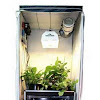
Grow tents are box shaped, and are usually created with a canvas, along with PVC that holds them up. On the outside, grow tents are black or dark blue in color, while on the inside, there is a Mylar like material. The dark exterior of grow tents produce extra heat through absorbing it. As a result, on the inside there is a sufficient amount of light that is need for plants to grow well. One can choose from various different styles of grow boxes that are available at local shops as well as on-line.

The cost of grow tents ranges between $200 to $500, so they are usually rather affordable for many people. Once the grow tents and the plant growing equipments are set up, all that one needs are the seeds and plant food. Some people also make use of grow tents to grow plants for commercial reasons.

It is indeed possible to cultivate any kind of a plant in grow tents using the hydroponics method. All that one needs to ensure is that there is sufficient heat and lighting, water, and the nutrients that the plants require for their growth. Additionally, one can even grow vegetables like peas and tomatoes in grow tents. Grow tents have proven to be the ideal covered facility to cultivate any kind of plants that you want to cultivate.

The use of grow tents has also made is easier to save water, something which is not quite possible with the conventional methods of gardening. In the hydroponics process, there is a much more efficient usage of water, and equipments like timers server to preserve more energy as well. The level of water and energy control that a grower is equipped with in using hydroponics is the main reasons why indoor grow tents work out so well for indoor gardening.

Cultivating plants indoors with the use of grow tents and hydroponic has proven to be a very happy solution for those people who find themselves with very limited spaces to grow plants in. This is especially the case in densely populated cities, where large concrete buildings have taken most of the available empty spaces. Indoor gardening has therefore gained rather rapidly in popularity.

The availability of grow tents has afforded people the chance to continue to pursue their interests in gardening and growing fresh plants, fruits, flowers, and vegetables. Additionally, there is an added incentive with this, for the trouble with bugs, weeds, and tilling is eliminated. Growing plants with grow tents and hydroponics is not only a fun past time, but it also makes it possible to beautify your home with blooming plants and flowers.

Hydroponic Greenhouse Systems

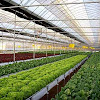
CFL Light BulbsThe usage of hydroponic greenhouse systems to cultivate plants is rather a good idea. It becomes much easier to take care of all the means and requirements involved for an indoor hydroponic garden to thrive. One can control all the fundamental factors like lighting and aeration, and the environmental temperature. Additionally, a lot of space is needed to set up the watering and lighting systems for hydroponic gardening. One can place these systems exactly where they should be kept. This is a critical factor in hydroponics, since the supply of water and lighting is more important than in a conventional garden.

The biggest advantage of hydroponic greenhouse systems pertains to lighting. Hydroponically cultivated plants require an appropriate amount of lighting. With hydroponic greenhouse systems, daylight is naturally cleansed and filtered away. It is also possible to manage the amount and direction of the light that enters the greenhouse through shutters. Moreover, much less energy is utilized since there is hardly any need to keep the grow lights burning continuously.

With hydroponic greenhouse systems, the process of supplying nutrients to the plants is very simple and easy to manage. This is an important point to consider, since a well growing hydroponics garden, need an appropriate supplement for soil. Since hydroponics does not involve soil, the pH levels of alkaline and acids may vary considerably, since they all rely on the quality of the water that they are dissolved in. With hydroponic greenhouse systems, one is able to set up an automatic pH controller so that there is no need to regularly check the level of pH.

Maintaining the environmental temperature in hydroponic green house systems is also rather critical. Even when the climate is chilly, a well built greenhouse will maintain the appropriate temperature, and it would not be necessary to use a heater. If one resides in an area where the climate is cold, yet there is plenty of sunshine, it is best to use a hydroponic greenhouse system. One may also install fans and ventilators to aid in maintaining and regulating the temperature in the greenhouse.

While there are a variety of hydroponic greenhouse systems available for purchase, one can construct a self-made system as well, right from scratch. There are several kits available in various sizes and designs, and some of these will also make it possible to increase the size of an indoor hydroponic greenhouse system. It’s well considering then to get a valuable structure for an indoor hydroponic garden.

On a final note, hydroponic greenhouse systems are a marvelous new concept to understand and utilize in your pursuit of indoor gardening!

Ebb & Flow Hydroponics System

CFL Light BulbsThrough using the ebb and flow system, the supply of nutrients and oxygen to the plants is considerably enhanced. This has a very beneficial impact on the health of the plants and they are growing faster and turn out richer.
The main purpose of the ebb and flow system is to supply nutrients to growing plants through the water contained in a sizeable reservoir. This reservoir is connected to a pump that supplies water mixed with nutrients to the tray in which the plants are kept. The duration for pumping the nutrition solution to the plants takes about half an hour. The plants are thus well soaked with the liquid solution and received the appropriate supply of nutrition that they require to flourish. After each pumping cycle, the nutrition solution accumulates back into the reservoir for subsequent usage.
In the ebb & flow process, the plant roots take in only that amount of nutrients that they need. Concurrently, the nutrients take away any stale air from the roots. Hence, the plants receive air that is replete with oxygen, and grow well through being supplied with the very best combination of nutrition and air.
Given the way the ebb and flow system works, one can be sure that the plants that will grow will be stronger and much healthier than if they were cultivated using soil. And the rate at which they develop is considerably enhanced, since they are relieved of any poor quality ingredients, and receive rich nutrition and oxygen filled air.

The ebb and flow system comes with a timer and it can operate autonomously. It is therefore perceived as one of the most adept kind of hydroponics systems. One can rely on the fact that the produce from the ebb and flow system will be lust and vigorous. It is suggested, however, that this system be used indoors, and a grow box be utilized so that the plants have exposure to a more conducive environment to develop adequately. Grow boxes take away any kind of gardening hassle, and are a better alternative to creating one’s own system since several potential obstacles in plant cultivation can be avoided.
On a final note, the ebb & flow system will render healthier and rapid plant growth, and will make it possible to have a very good looking indoor garden. Go ahead and try it today, you’ll be amazed as to what you achieve with it! Happy gardening!

Aeroponics

One can safely say that the aeroponics method is technically the best of all the other hydroponics systems that have been developed. No grow media are required with to provide nutrition to plants. The most basic aeroponics system comprises of a reservoir and channels punched with holes to hold the plant. The reservoir contains the nutrients and the channel is used to spray the roots of the plants with these. A nutrient pump is also a valuable part of an aeroponics system that is used to supply organic aeroponics nutrients to the plants’ roots.
As already mentioned, no growing media is needed in aeroponics gardening to supply the essential nutrients to the plant roots. Yet it is entirely possibly to provide them with the most necessary ingredients to grow well – air, water, and nutrients. This method alone renders aeroponics as the most technically designed hydroponics systems.
Building a basic aeroponics system at home also proves to be rather simple and economical. One can make use of some very basic materials that are available at considerably cheap prices. However, for the best results, it is recommended that one should purchase a fully built aeroponics tool kit from a hydroponics shop.
As stated above, the main tool used in aeroponics is the reservoir that holds the nutrition solution that is to be supplied to the plants. The plant roots hang in this reservoir, and this makes it extremely convenient to watch how well they are growing. Additionally, it is also very easy for the plant roots to imbibe the nutrition supply through hanging the reservoir. The Aeroponics cloner that is included with most aeroponics kits helps to make sure that all the plants roots receive a fair and equal supply of nutrients through the reservoir. And it is extremely easy to change the nutrition solution in the reservoir.

Most people prefer to have freshly cultivated herbs and vegetables to use as ingredients for cooking. The aeroponics system has therefore become extremely popular, for it helps to save a lot of time and energy that is consumed in growing these ingredients the conventional way. Moreover, with this system, plants grow more rapidly and turn out to be healthier than if they were grown through any other method. And one can rest assured that that they will also experience consistent good results with aeroponics.

Friday, 25 November 2011

Aeroponics

aeroponicsOne can safely say that the aeroponics method is technically the best of all the other hydroponics systems that have been developed. No grow media are required with to provide nutrition to plants. The most basic aeroponics system comprises of a reservoir and channels punched with holes to hold the plant. The reservoir contains the nutrients and the channel is used to spray the roots of the plants with these. A nutrient pump is also a valuable part of an aeroponics system that is used to supply organic aeroponics nutrients to the plants’ roots.

As already mentioned, no growing media is needed in aeroponics gardening to supply the essential nutrients to the plant roots. Yet it is entirely possibly to provide them with the most necessary ingredients to grow well – air, water, and nutrients. This method alone renders aeroponics as the most technically designed hydroponics systems.

Building a basic aeroponics system at home also proves to be rather simple and economical. One can make use of some very basic materials that are available at considerably cheap prices. However, for the best results, it is recommended that one should purchase a fully built aeroponics tool kit from a hydroponics shop.
As stated above, the main tool used in aeroponics is the reservoir that holds the nutrition solution that is to be supplied to the plants. The plant roots hang in this reservoir, and this makes it extremely convenient to watch how well they are growing. Additionally, it is also very easy for the plant roots to imbibe the nutrition supply through hanging the reservoir. The Aeroponics cloner that is included with most aeroponics kits helps to make sure that all the plants roots receive a fair and equal supply of nutrients through the reservoir. And it is extremely easy to change the nutrition solution in the reservoir.

Most people prefer to have freshly cultivated herbs and vegetables to use as ingredients for cooking. The aeroponics system has therefore become extremely popular, for it helps to save a lot of time and energy that is consumed in growing these ingredients the conventional way. Moreover, with this system, plants grow more rapidly and turn out to be healthier than if they were grown through any other method. And one can rest assured that that they will also experience consistent good results with aeroponics.